

Scaling a logistics business is hard. Scaling one that deals with millions of sticky, glass bottles and residential pickups? That’s a nightmare.
When Depot Dash first approached us, they had a vision: a service that allowed people to skip the trip to the recycling depot. Instead of lugging bags of bottles to a facility, customers could just book a pickup from their doorstep. It sounded simple on a napkin, but the operational reality was a tangle of manual scheduling, confused drivers, and payout headaches.
Our team at GiantByte didn’t just see a recycling problem. We saw a data problem. We saw a workflow problem. And most importantly, we saw an opportunity to build a digital nervous system for a business ready to explode.
The Logistics Nightmare
Before we got involved, the process was a grind. Think about it. You have hundreds of customers scattered across a city. You have a handful of drivers. Every day, someone has to decide who goes where, in what order, and how to track exactly which bag of bottles belongs to which person once they hit the sorting facility.
If you get the route wrong, you waste gas and time. If you lose track of a bag, you lose a customer. If the payout process takes weeks, nobody uses your service twice.
Depot Dash needed more than a “booking form.” They needed an end-to-end platform that could handle everything from the first click on a smartphone to the final e-transfer in a customer’s bank account. Our experts sat down with their team to map out every single pain point. We didn’t just listen; we looked for the “unsolvable” bits that were keeping their operational VPs up at night.
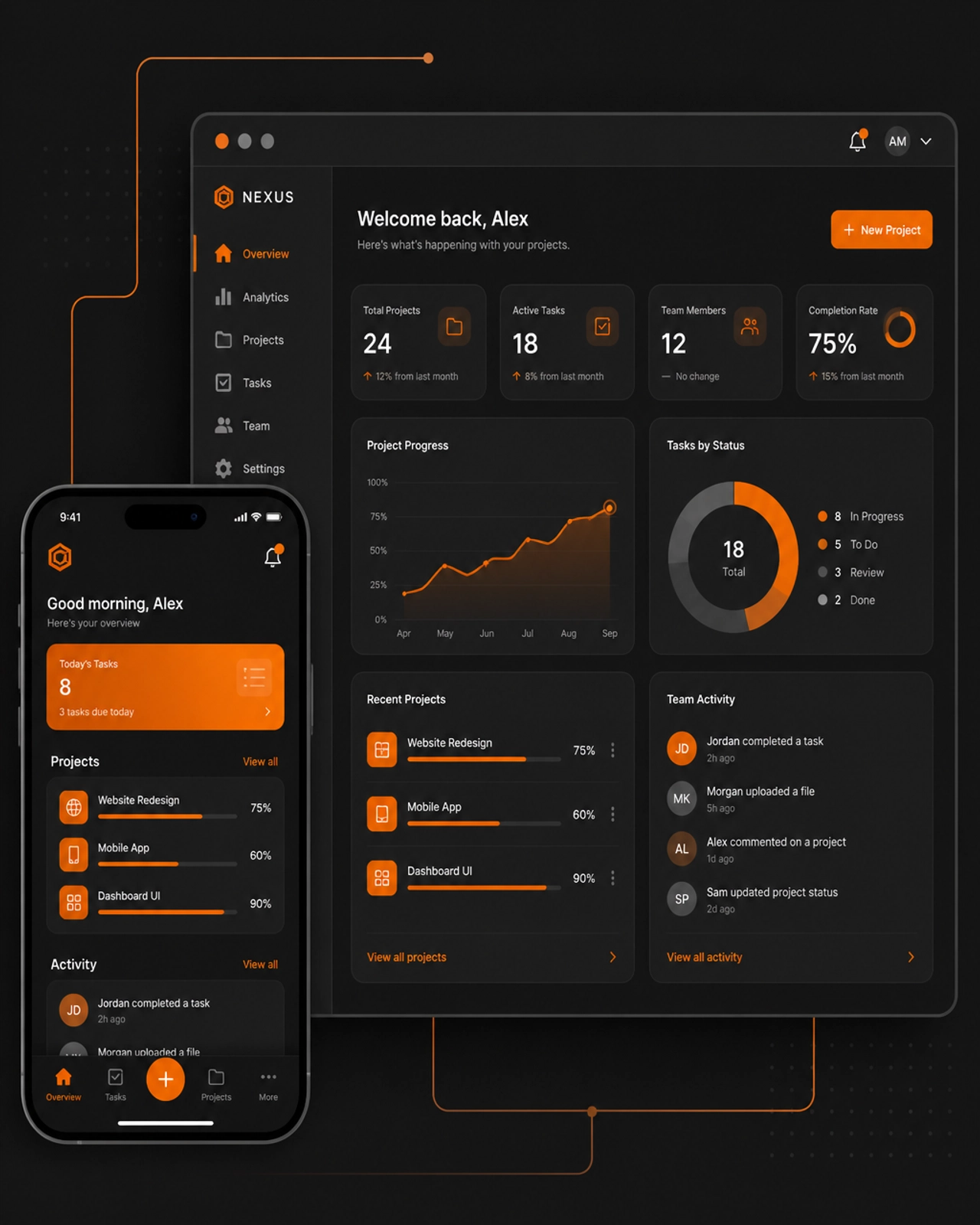
Building the Nerve Center
We didn’t want to build a patchwork of off-the-shelf tools. To scale, Depot Dash needed a custom-built infrastructure. We decided on a robust stack: Django and PostgreSQL for a rock-solid backend, React for a snappy web frontend, and React Native for the mobile tools used in the field.
We broke the project down into three main pillars:
- The Customer Experience: A seamless portal where users could sign up, schedule pickups, and check their balances in seconds.
- The Administrative Hub: A “God-view” for the staff to see every route, every driver, and every penny moving through the system.
- The Field Tools: A dedicated driver infrastructure that turned a smartphone into a high-powered logistics terminal.
By building from the ground up, we ensured that every part of the system talked to the other. When a customer cancels a pickup, the driver’s route updates in real-time. When a staff member records a bottle count at the depot, the customer gets an automated SMS notification. No manual data entry. No lost sticky notes. Just clean, automated logic.
Engineering the Perfect Route
The “brain” of the operation is the route planner. In the early days, dispatchers were manually guessing the best paths for drivers. That doesn’t work when you have 500 pickups a day.
Our developers engineered a sophisticated route generation pipeline. We didn’t just plug addresses into a map. We used a staged approach to keep costs low and quality high. First, we used latitude and longitude estimates to group pickups into geographic clusters. Then, we ran those clusters through the Google Distance Matrix workflow to find the absolute most efficient path.
The result? Routes are pre-planned at scheduled times, drivers get a turn-by-turn manifest on their phones, and the business saves thousands on fuel and labor every month. This kind of custom software solution is what turns a local startup into a regional powerhouse.

Tags, Bags, and Payouts
One of the biggest hurdles was “traceability.” How do you know Bag #452 belongs to John Smith once it’s dumped onto a sorting table with 5,000 other bags?
GiantByte implemented a unique tagging system using four-digit identifiers. These tags are generated to avoid repetition over an extremely long operating horizon. When a bag arrives at the facility, staff can photograph and record the contents, and the system automatically links that data back to the original pickup.
Then came the payouts. Initially, we wanted a direct API connection for banking, but the local banking constraints were a wall. Instead of giving up, we pivoted. We built a custom export process that generates bank-upload-ready files for e-transfers. It’s practical, it’s reliable, and it works within the real-world constraints of the financial system.
The Result: From Napkin to National Scale
In just four months, our team took Depot Dash from a manual struggle to a fully automated operation. They now have:
- Automated Scheduling: No more manual spreadsheets.
- Real-Time Visibility: Admins can see exactly where every driver is at any moment.
- Scalable Foundation: The platform can handle 10x the current volume without breaking a sweat.
- High Accuracy: The bottle-to-customer association is near-perfect, building massive trust with their user base.
We love these kinds of challenges. The ones where someone says, “It’s too complicated to automate.” We disagree. At GiantByte, we believe that with the right architecture and a “can-do” mindset, any business process can be turned into a competitive advantage.

Ready to see the technical “How”?
If you’re an engineer or an operations director who wants to dive into the code and the specific logic behind our route optimization and database architecture, we’ve got you covered.
Read the Technical White Paper: Engineering the Depot Dash Routing Engine
Do you have a logistics nightmare of your own?
Whether you’re moving bottles, boxes, or people, the same rules apply: you need software that works as hard as you do. Stop fighting with spreadsheets and start building for the future.
Let’s have a conversation about your next big project. We’re ready to listen.