

At GiantByte, we don’t just build apps; we solve deep-rooted industry bottlenecks with high-precision engineering. One of our most ambitious projects to date is Arris Stone, a comprehensive SaaS platform built for the countertop fabrication industry.
While most software in this space relies on clunky legacy tools or fragmented spreadsheets, we set out to build a “glove-fit” solution. This white paper dives into the technical architecture of the Arris Stone blueprinting engine, the real-time logic that powers its quoting system, and the scalable infrastructure that makes it a viable SaaS for enterprise-level fabricators.
Check out our Arris Stone Case Study Overview
The Challenge: Bringing CAD-Level Precision to the Browser
Countertop fabrication is an industry of millimeters. A mistake in a drawing doesn’t just mean a minor delay: it means wasting thousands of dollars in raw stone. Traditionally, fabricators used manual sketches or expensive, overly complex CAD software that didn’t talk to their billing systems.
Our goal was to bridge that gap. We needed to build a drawing engine that was as precise as a desktop CAD application but as accessible and collaborative as a modern web app.
Why HTML Canvas?
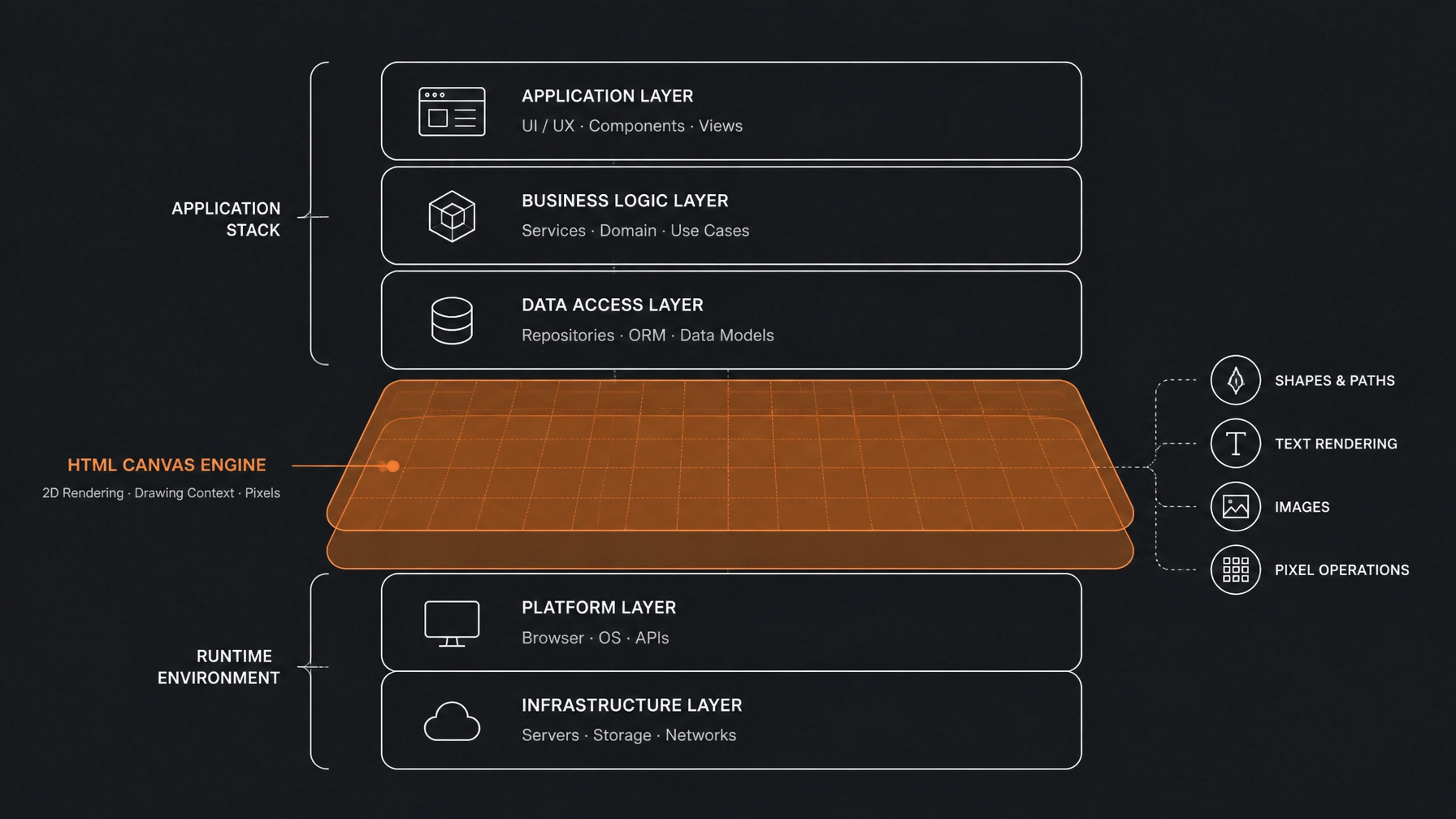
When our experts sat down to design the core drawing interface, we chose HTML Canvas. While many web projects can get by with standard SVG-based drawing libraries, the complexity of countertop layouts: complete with dynamic corners, cutouts, and real-time structural data: demanded a more performant approach.
By using the Canvas API, our developers gained low-level control over every pixel. This allowed us to:
- Handle Complex Geometry: Smoothly render intricate countertop shapes, including custom sink cutouts and radius corners.
- Frame-by-Frame Rendering: Ensure the interface remains fluid and responsive even when manipulating large, data-heavy datasets.
- Custom Interaction Logic: Build specific drag-and-drop behaviors that reflect real-world fabrication constraints, rather than fighting against a pre-packaged library’s limitations.
The Engine: Real-Time Quoting and State Management
A blueprint is only as good as the data behind it. In Arris Stone, every line drawn on the screen is tied to a complex pricing model.
Bridging Design and Dollars
We engineered a specialized state management system that links the drawing engine directly to a material and labor database. As you modify a measurement or change a stone type, the system recalculates the entire quote in real-time.
How did we achieve this without lag?
- Efficient Dataset Modeling: We structured the underlying blueprint data to allow for rapid, incremental updates rather than re-calculating the entire project from scratch on every mouse move.
- Optimized Refresh Cycles: By decoupling the visual render from the data calculation, we kept the UI snappy while the heavy math happened in the background.
- Real-Time Validation: The engine doesn’t just draw; it checks for errors. If a design violates fabrication rules, the system flags it instantly, saving the user from costly production mistakes.
Scaling the Architecture: The Django and React Stack
For a business-critical tool like Arris Stone, reliability isn’t optional. We chose a technology stack that balances rapid development with rock-solid stability.
The Frontend: React
We chose React to handle the complex UI of the Arris Stone dashboard. React’s component-based architecture allowed us to build a modular system where the drawing engine, order list, and calendar could all interact seamlessly. This modularity makes it easy for our crew to roll out new features without disrupting existing workflows.
The Backend: Django (Python)
For the “brain” of the operation, we utilized Django. This framework is renowned for its security and its ability to handle complex relational data: exactly what’s needed when you’re managing thousands of unique orders, vendors, and customers.
The Database: PostgreSQL
Every measurement, every price point, and every project milestone is stored in PostgreSQL. Its support for ACID transactions ensures that a fabricator’s data remains consistent and durable, even during high-traffic periods.

Turning a Tool into a SaaS: Stripe and Marketplace Logic
Arris Stone isn’t just a utility; it’s a business. To transform this powerful engine into a scalable SaaS platform, we integrated a sophisticated billing and subscription layer.
Enterprise-Grade Billing with Stripe
We leveraged Stripe’s infrastructure to handle more than just simple payments. The integration includes:
- Automated Recurring Billing: Fabricators can manage their subscriptions through a branded self-service portal.
- Marketplace Transaction Fees: Because Arris Stone connects cabinet suppliers and fabricators, we built logic to manage transaction fees between different vendors within the platform.
- Global Security: By using Stripe, we ensured that sensitive financial data never touches the Arris Stone servers, providing peace of mind for every user.
Conclusion: Engineering for Real-World Impact
The Arris Stone platform is a testament to what happens when you combine specialized industry knowledge with high-end software engineering. By moving the blueprinting process from the notepad to the browser, we’ve helped fabricators:
- Generate quotes in minutes, not days.
- Eliminate pricing inaccuracies through live data syncing.
- Scale their operations with a centralized, cloud-based hub.
At GiantByte, we thrive on these kinds of technical challenges. If your business is struggling with a complex workflow that standard software can’t fix, we’re ready to build the solution.

Ready to build something better?
Let’s talk about your project. Whether it’s a custom drawing engine or a complex billing platform, our experts are here to turn your vision into a high-performance reality.