
You have a vision for a new digital product. Maybe it’s a tool to revolutionize your internal billing, or a customer-facing platform that solves a major pain point in your industry. You’ve sketched the idea on a paper napkin, and now you’re facing the first big technical hurdle:
Should it be a web app or a mobile app?
At GiantByte, we hear this question every week from founders and company presidents. It’s a high-stakes decision. Choosing the wrong path can lead to wasted budget, missed deadlines, and a product that doesn't fit your users' lives.
The good news? There isn't one "right" answer. The best choice depends entirely on your business goals, your budget, and how your users actually work.
As a leading software development company in Canada, our team focuses on building what actually works for your ROI. Let’s break down the pros, the cons, and the "middle path" you might not have considered.
The Case for Custom Web Applications
For most business-critical tools, a custom web application development project is the logical starting point. Why? Because web apps live in the browser. They don't care if your user is on a Mac, a PC, an iPad, or a Linux machine: as long as they have a URL, they have your software.
1. Speed to Market
We know that in business, speed is a competitive advantage. Web apps typically launch faster than native mobile apps. There are no app stores to wait for and no complex "approval" processes from tech giants. We build, we test, and we deploy. You can have a functional product in front of users in weeks, not months.
2. Lower Development and Maintenance Costs
Building a web app means maintaining one single codebase. If you need to fix a bug or add a feature, we update the server, and every single user sees the change the next time they refresh their page. You aren’t paying our experts to fix the same bug twice: once for iOS and once for Android.
3. Frictionless Access
Have you ever been frustrated by having to download yet another app just to perform a simple task? Your customers feel the same way. Web apps offer zero friction. Your users just click a link and they’re in. This is why web apps are the gold standard for custom billing software and B2B dashboards.
When Native Mobile Apps Win the Day
If web apps are so efficient, why do native mobile apps even exist? Because sometimes, the browser is a bottleneck. If your product needs to be a seamless part of a user’s daily habits, or if it needs to talk to hardware, mobile is the way to go.
1. Superior Performance and UX
Native apps are built specifically for the hardware they run on. This means smoother animations, faster load times, and a "snappiness" that web apps struggle to match. If your users are going to spend three hours a day in your tool, that extra polish matters.
2. Deep Hardware Integration
Does your product need to use the camera for scanning? Does it need to connect via Bluetooth to a piece of manufacturing equipment? Or perhaps it needs to track precise GPS location in the background?
While web apps are getting better at this, native mobile apps still reign supreme for hardware and software integration. If the device's sensors are core to your value proposition, go mobile.
3. Offline Capabilities
Web apps generally need an internet connection to function. If your team is using your software in a remote warehouse or a basement with no Wi-Fi, a native mobile app can store data locally and sync up later. We’ve built solutions like this for automated logistics where connectivity is never guaranteed.
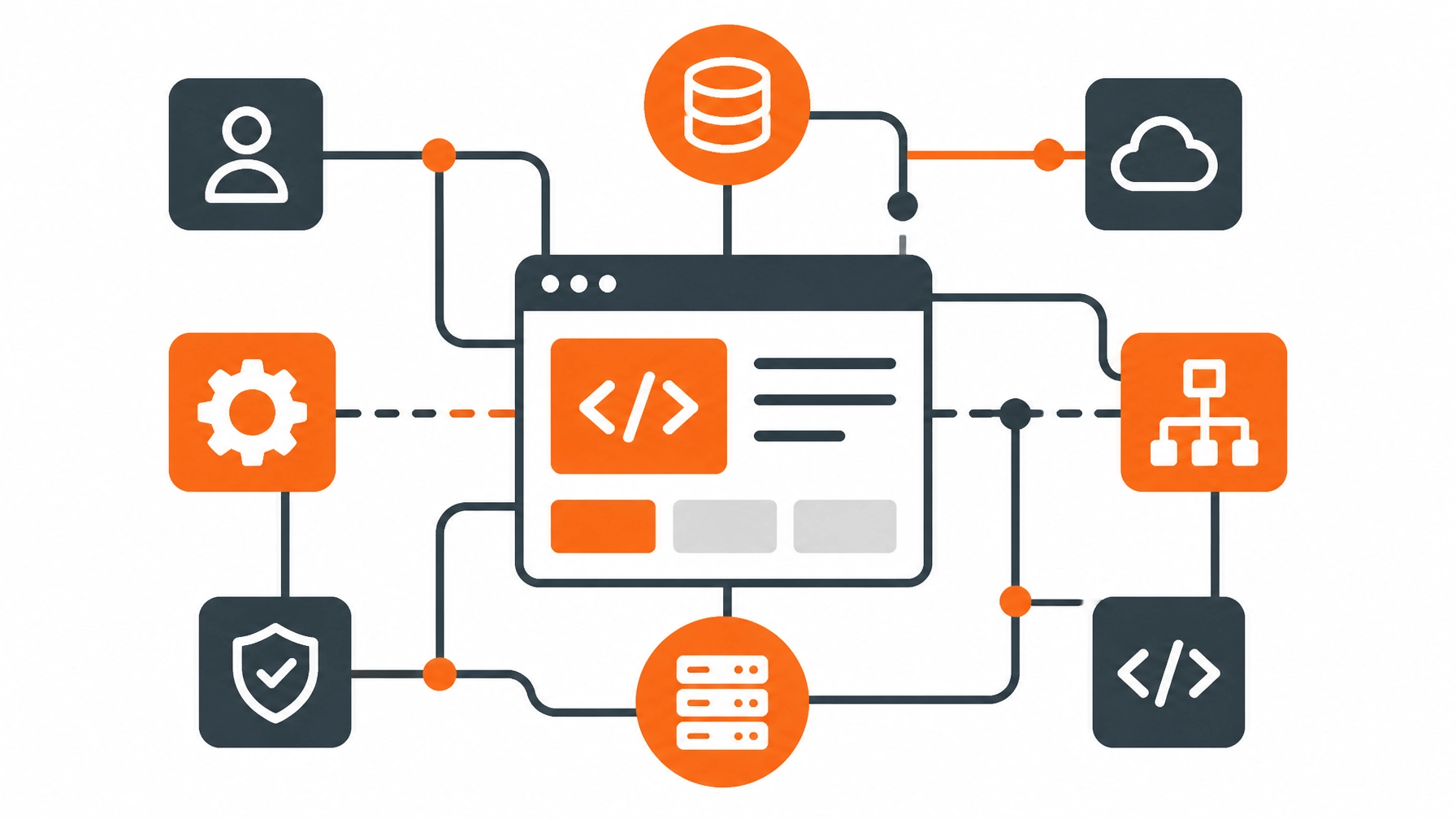
The GiantByte Approach: The Best of Both Worlds
You might feel like you’re being forced to choose between "fast and cheap" (Web) or "powerful and expensive" (Mobile). But it doesn’t have to be a binary choice.
Our developers often recommend a Cross-Platform approach using frameworks like React Native. This allows us to write most of the logic once but still deploy it as a high-performance app on both the Apple App Store and Google Play. It’s the "sweet spot" for product development software because it balances cost-efficiency with a native feel.
Why work with a Canadian-based team?
When you're deciding between these complex paths, you need more than a vendor: you need a collaborator who listens. Because we only use Canadian-based experts, our project management is personalized to your time zone and your business culture. We don't hide behind jargon. We tell you the project risks upfront and help you choose the path that protects your investment.
Making the Decision: A Quick Checklist
Still on the fence? Ask yourself these three questions:
- How often will people use it? If it’s once a month for a report, build a web app. If it’s ten times a day on the go, build a mobile app.
- Do you need hardware access? If you need constant access to the camera, Bluetooth, or NFC, mobile is usually the winner.
- What is your budget for maintenance? Remember, mobile apps require constant updates to keep up with Apple and Google’s OS changes. Web apps are much more "set it and forget it" on the client side.

Let’s Have a Conversation
At GiantByte, we love challenging projects that others say can’t be done. Whether you need a sophisticated manufacturing workflow software or a sleek consumer app, we have the experts to build it.
We aren’t locked into one platform. We choose the technology that fits your problem, not the other way around.
Are you ready to move from a "paper napkin" idea to a business-critical tool? Reach out to our team today. Let's talk about what you're building and help you decide which path will save you the most time and money in the long run.
{“@type”:”BlogPosting”,”image”:”https://giantbyte.com/wp-content/uploads/2026/07/sS0m0xzONlD.webp”,”author”:{“name”:”GiantByte”,”@type”:”Organization”},”@context”:”https://schema.org”,”headline”:”Custom Web Applications vs. Mobile Apps: Which Do You Need?”,”publisher”:{“logo”:{“url”:”https://giantbyte.com/wp-content/uploads/2026/06/FzVC4iKCipQ.webp”,”@type”:”ImageObject”},”name”:”GiantByte”,”@type”:”Organization”},”articleBody”:”You have a vision for a new digital product… Should it be a web app or a mobile app? At GiantByte, we hear this question every week… Choosing the wrong path can lead to wasted budget… For most business-critical tools, a custom web application development project is the logical starting point… Native apps are built specifically for the hardware… Our developers often recommend a Cross-Platform approach using frameworks like React Native…”,”description”:”Discover the differences between custom web applications and mobile apps. Learn which is best for your business ROI, cost, and user experience.”,”datePublished”:”2026-07-26″}